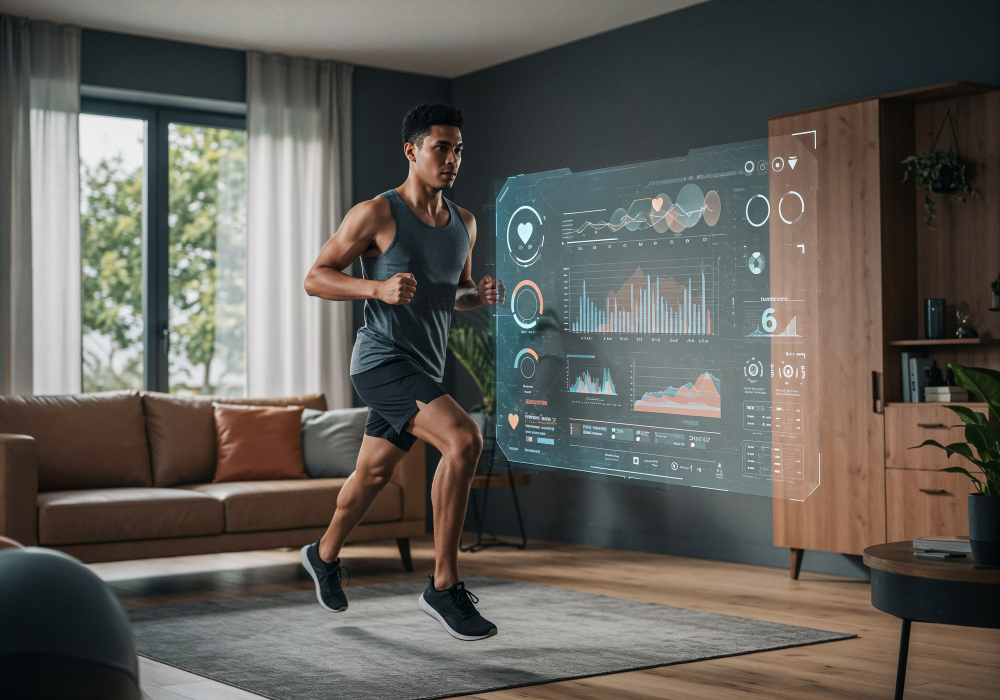
The global fitness app market has been growing fast for the past few years, and it’s not slowing down anytime soon. Users can work out anytime, follow guided programs, and track their progress without pressure. This has led to strong growth in the USA and India. With smartphones & internet access now widely available, fitness apps have become part of everyday life for many people. Growing awareness around health and wellness has pushed users to rethink how they approach fitness, nutrition, and long term habits. Rather than adjusting their lives around gym schedules, people now prioritise solutions that adapt to their routine.
Fitness apps remove these barriers by offering users flexible, on demand workouts, clear progress tracking, and goal based plans directly on the phone. This shift is powerful in the US compared to India. The United States leads in paid subscriptions, wearable integration, and AI-based coaching, while India is growing rapidly with affordable, easy-to-use, mobile-first fitness apps. Together, these two markets are driving strong demand for custom fitness app development, gym app development, and full-scale health and fitness app solutions.
Why Fitness Apps Are in High Demand?
The ideal fitness app development is easy to use, performs well, and the best part is that it offers a personal touch. Core functions include user accounts, exercise content, progress monitoring, smartwatch compatibility, alerts, payment options, and admin tools.
-
Busy Lifestyle
Most individuals balance work, family, and personal obligations, which leaves no time for a gym. Fitness apps eliminate this stress by enabling workouts at any moment and location. This freedom helps users stay active without upsetting their schedule, which is why workout app development keeps attracting more followers.
-
Home Workouts
Home workouts are no longer a temporary solution. Many users actively prefer them. Short videos, guided programs, and routines that don’t require equipment make fitness easier to maintain. Apps also remove extra costs like gym memberships and travel time, which helps users stay consistent longer.
-
Wearable Integration
Smartwatches & fitness bands have transformed health tracking for many people. Users can now see their steps, heart rate, burned calories, and sleep patterns as they happen. When apps work well with these gadgets, users tend to trust them more and stay more involved.
-
Personalised Fitness Plans
Cookie-cutter exercise plans have become outdated. Now, users seek fitness routines tailored to their specific age, weight, objectives, & activity levels. AI-driven customisation enables workouts to adapt to the user, resulting in improved outcomes, higher drive, and greater overall user satisfaction.
Here Are the Key Features of a Fitness App
The ideal fitness app development is easy to use, performs well, plus offers a personal touch. Some of the key features include user accounts, exercise content, progress monitoring, smartwatch compatibility, alerts, payment options, as well as admin tools.
-
User Registration & Profiles
Easy sign-up using email, phone, or social media gets users going fast. User profiles hold personal info like fitness aims, health stats, likes, and workout records. This info helps the app give tailored tips and follow long-term growth.
-
Workout Plans & Videos
Fitness apps come loaded with pre-recorded and live workout videos sorted by goals, fitness stages, and gear needed. Video guidance through organized, trainer-led sessions improves form, motivation, and even dedication among participants.
-
Diet & Nutrition Tracking
Diet and nutrition features pair healthy eating with workouts. The healthy eating aspect includes meal planning, calorie tracking, and food databases. This balances fitness goals, which play a key role in health and fitness app development.
-
Activity & Progress Tracking
Activity tracking lets users record steps, burned calories, completed workouts, weight changes, and performance metrics. The visual progress charts keep users accountable, motivated and focused on long-term fitness outcomes.
-
Wearable Device Integration
Automatic data syncing is enabled by integration with Apple Watch, Fitbit, Garmin, and other IoT devices. This enhances accuracy, lowers manual input and delivers real-time insights, thus creating a better user experience.
-
Push Notifications
Workout reminders, hydration alerts, streak updates, and motivational prompts are among the push notifications. All these pop-ups will boost the daily app usage, improve retention, and help users establish routines of their choice.
-
Payment Gateway
Safe ways to pay let you buy subscriptions, premium plans, one-on-one training, and extras in the app. Having lots of payment choices makes things easy for you and helps the app make money.
-
Admin Dashboard
Full user control is provided, including content, subscriptions, trainers, analytics and performance with an admin dashboard. It offers seamless operations, informed decisions and scalability as the platform grows.
What Are The Different Types of Fitness Apps?
The fitness app development types differ in their objective and intended audiences. These comprise workout applications, gym administration solutions, weight trackers, yoga applications, and personal coach applications. Each one of these types serves a particular user requirement by enhancing the fitness ecosystem.
-
Workout & Training Apps
The applications used in workout app development provide guided workouts, exercise programs, and tracking of progress. They serve people who are fitness enthusiasts and who desire a structured, home-based, self-paced fitness program that does not involve going to a gym.
-
Gym Management Apps
Gym app development assists gyms in managing membership. They are also helpful in scheduling, management of the trainers, payments, and attendance. Designing a gym app development is a good method of streamlining operations and retention in the long term using digital technologies.
-
Diet & Nutrition Apps
Diet and nutrition apps stress the value of planning meals, counting calories, and getting dietary advice. These apps often include fitness tracking to help users reach their overall health and weight goals.
-
Yoga & Meditation Apps
Yoga and meditation applications are centered on mindfulness, stress reduction and flexibility. They also provide guided treatments and breathing exercises to improve mental health and physical fitness programs.
-
Personal Trainer Apps
Personal trainer apps link users with certified trainers through live sessions, tailored plans, and progress checks. This gives users personalized coaching beyond the gym walls.
Fitness App Development Process
Designing a fitness app entails research, design, development, testing, launching, and maintenance. Every step ensures the app satisfies user demands, is functional, and capable of expansion.
-
Market Research
Market research assists in discovering target users, competitors, existing trends and possible sources of profit. This phase clarifies the concepts, establishes the feature priorities and reduces development risks.
-
UI/UX Design
A good UX/UI design allows users to move about and interact effectively. In the case of fitness applications, the functionality must be basic, but sophisticated enough to maintain attention of the user without the user being put off.
-
App Development
This stage includes backend development APIs, databases and frontends that are based on mobile or cross-platform technology. This guarantees that the app is well-performing, it scales, and integrates well with other systems.
-
Testing & QA
QA and testing identify bugs and performance problems and point out security vulnerabilities. After the testing process, ensure that users have a stable, secure, and smooth experience regardless of the device they use.
-
Launch & Maintenance
As soon as the app goes live, it needs ongoing updates, watching, feature upgrades, and tech help. This keeps it competitive and in step with what users want as time goes on.
Cost to Develop a Fitness App
The price of a fitness app development depends on the features it has, how complex it is, which platforms it works on, and where it's developed. Understanding what affects the cost helps companies plan their budgets and pick the right approach.
-
Basic Fitness App Cost
Simple fitness apps include user profiles, workout content, and ways to track progress. These are cheaper options, and the cost for simple apps usually varies from $30,000 – $50,000. This is perfect for new businesses, minimum viable products, or those who are testing the market.
-
Advanced Fitness App Cost
More complex apps have AI-based suggestions that connect to wearables, offer live coaching, handle payments, and include admin dashboards. These features make development harder and raise the overall price, bringing the estimated cost between $80,000 and $150,000.
-
Factors That Affect Cost
1. Feature complexity
2. Platform selection
3. UI/UX depth
4. Third party integrations
5. Security
6. Constant support
-
USA vs India Development Cost
The USA has higher development costs because talent and operations are expensive there. India is a popular place to outsource custom fitness app development as it has skilled developers at a lower cost. Indian developers usually charge $25–$75 per hour, whereas developers in the USA charge between $150–$250 per hour.
Future Trends in Fitness App Development
Future basic fitness apps will rely on smart customization, captivating training sessions, and linked platforms. New tech boosts digital health by offering users more intelligent workouts, engaging activities, and tailored health insights that evolve with their needs, lifestyle, and long-term fitness goals.
-
AI-Based Fitness Coaching
AI fitness trainers provide users with workout plans that adapt to their performance, expert advice tailored to their needs, quick performance analysis, and form correction. AI, using user data, becomes less dependent on human trainers while maintaining workout effectiveness, user motivation, and measurable fitness results throughout the process.
-
AR/VR Workouts
Virtual Reality and Augmented Reality workouts have an impact on creating immersive and interactive training that copies real-world coaching. These technologies have improved the fitness world and made home workouts more enjoyable by creating virtual gyms, trainers, and guided routines.
-
Gamification
There are some important features associated with gamification, including badges, challenges, leaderboard, streaks, and rewards. The achievement-based and competitive sections motivate the users to visit the apps frequently, thereby making them continue using the fitness apps over a long period of time.
-
Smart Wearables & IoT
Working together across different devices will help stop injuries, make recovery quicker, and track overall wellness. This turns fitness apps into complete digital health systems.
Why Choose HybridPlus Infotech to Build Your Fitness App?
Opting for the right fitness app development company is the key to a successful fitness product. HybridPlus Infotech is a reputed app development company that builds custom fitness app development solutions to match real business goals. We take a clear approach to each project, starting with checking if the idea works and designing the look and feel. It is then followed by construction, testing, release, and long-term support of the app. Our team of professional programmers and modern technologies will enable us to make quality fitness applications on Android and iOS. Finally, but not least, we ensure that each app has been increased as more people utilize it, make money, and ensure that users keep coming back in the long run. The goal is not to create an app, but rather to build an effective, dynamic fitness ecosystem that helps the business grow in the long term.
FAQs
1. How much does it cost to develop a fitness app?
Fitness app development cost entirely depends on the features one would like to have on their app. This even includes app complexity, platform choice, and development location. Basic apps cost less, whereas advanced AI-driven fitness apps need higher budgets for long-term scalability needs.
2. How long does fitness app development take?
Fitness app development usually takes three to six months for basic apps. Advanced fitness apps with AI, wearables, and complex features can take six to twelve months from planning stages.
Both Android and iOS are strong platforms for fitness apps. Many businesses choose cross-platform development to reach more users, reduce costs, and launch faster across devices with shared codebases efficiently.